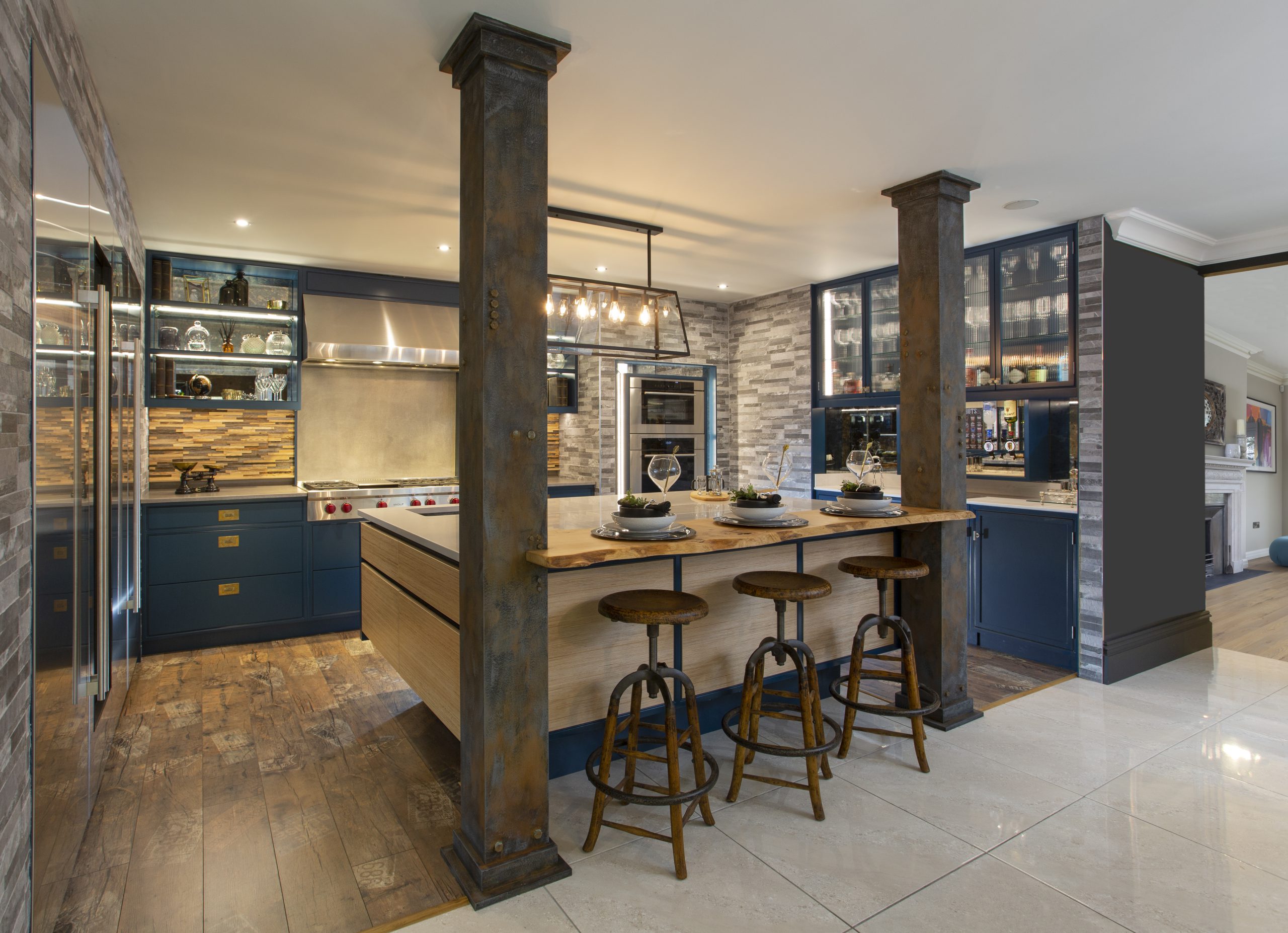
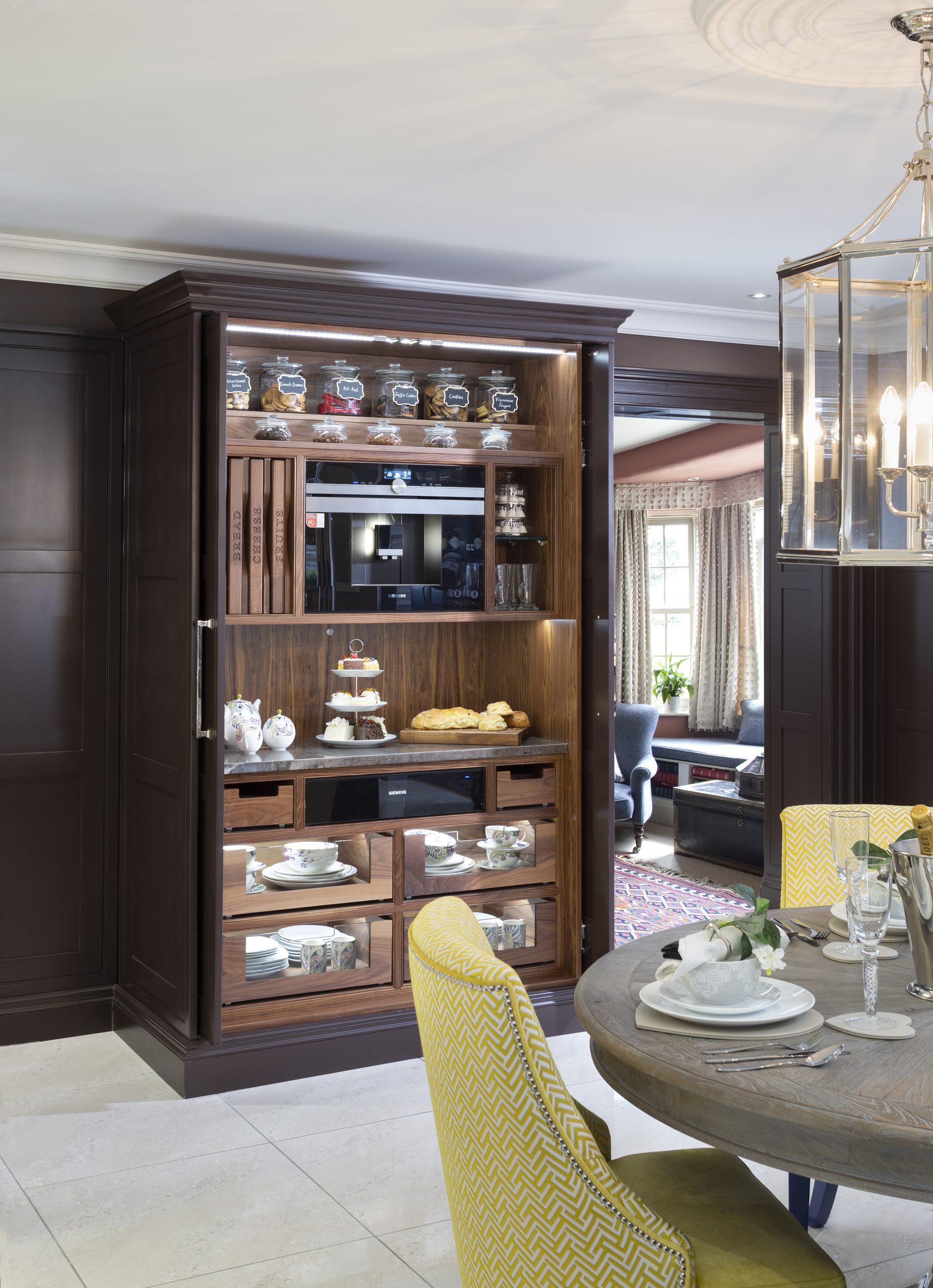

Most kitchen decisions can be changed later. Style is not really one of them. The door and frame construction you choose sets the character of the room, dictates a good deal of the cabinetry cost, and is the thing you will look at every day for the next fifteen or twenty years.
Search for kitchen ideas in Ireland and you will find a thousand photographs and very little explanation. The choice actually comes down to four families: in-frame, shaker, handleless and slab. They are not simply four looks. They are four different ways of building a cabinet, and understanding the construction makes the decision much easier.
In-frame kitchens
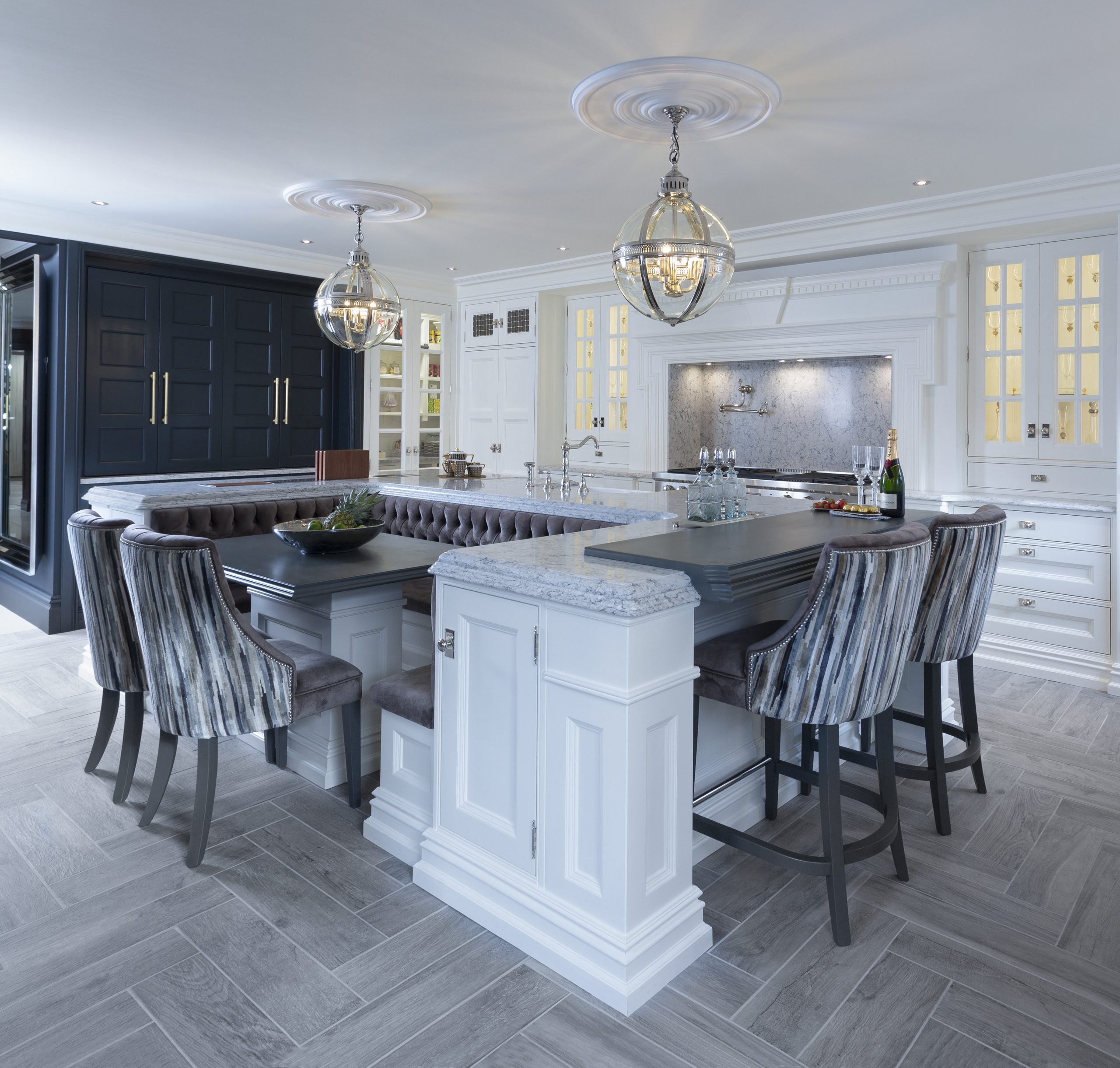
An in-frame kitchen is built the way fine furniture is built. A solid timber face frame is fixed to the front of each cabinet, and the door sits within that frame rather than over it. When the door is closed, you see a slim, even reveal of timber framing around it.
How it is built. The frame has to be made accurately and the door has to be hung to a consistent gap on all four sides, which is skilled work and cannot be rushed. There is no tolerance to hide behind, which is exactly why the result looks the way it does.
What it suits. Period properties, farmhouses, rectories, and new-build homes where the owner wants weight and permanence rather than minimalism. An in-frame kitchen looks like it was made for the room because, done properly, it was.
What to know. The frame takes up a small amount of internal space compared with a frameless cabinet of the same external size. It is also the most labour-intensive construction of the four, which is reflected in the price. In return it is the most substantial, and it ages extremely well.
Shaker kitchens
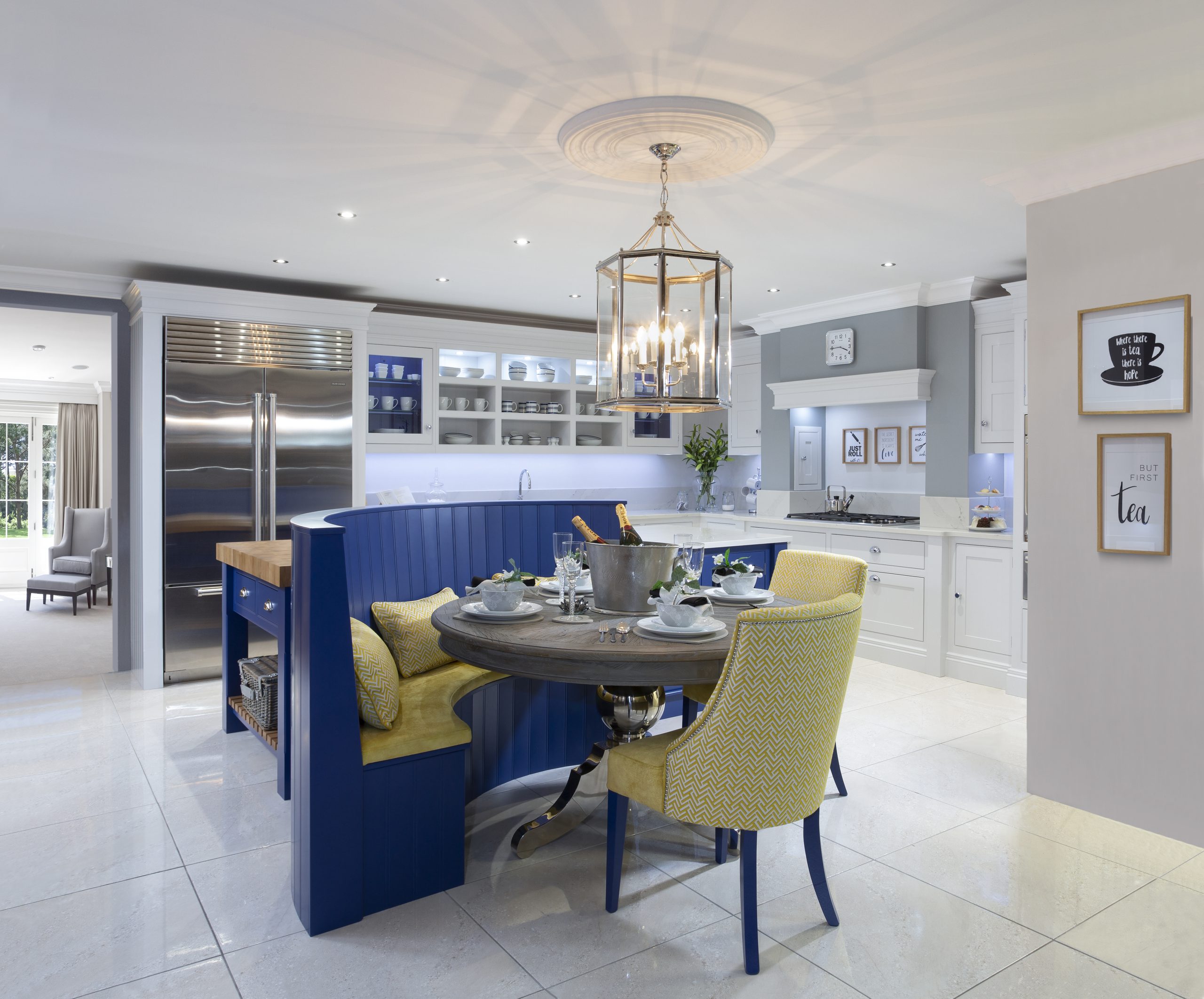
The shaker style is the most requested door in Ireland and has been for years, and its endurance is not an accident. A shaker door is a five-piece door: four rails and stiles framing a flat central panel. That is the whole idea, and its restraint is why it sits comfortably in almost any house.
How it is built. A shaker door can be made to very different standards. A quality shaker door is solid timber with a properly jointed frame. A budget one is a moulded profile pressed into board. From two metres away they look similar. Up close, and after a few years of family use, they do not.
What it suits. Practically everything, which is its strength and its limitation. It works in a cottage and it works in a new build. It carries colour beautifully. It is the safe answer, in the good sense of the word.
What to know. Because it is everywhere, a shaker kitchen distinguishes itself through detail rather than shape: the width of the rails, whether the frame is beaded, the paint colour, the ironmongery, and the quality of the joinery. Narrow rails read as more contemporary, wider rails as more traditional.
Shaker or in-frame? They are not alternatives to each other. A shaker door can be hung in an in-frame cabinet, and that combination is one of the most popular bespoke specifications in Irish homes. The style question and the construction question are separate.
Handleless kitchens
Handleless cabinetry removes the handle entirely, opening either through a routed groove in the door edge, a continuous rail recessed above the door, or a push-to-open mechanism.
How it is built. The tolerances are tight. With nothing to distract the eye, every gap between doors is on display, so a handleless kitchen only looks right if the cabinetry underneath is genuinely accurate. This is a style where bespoke construction shows.
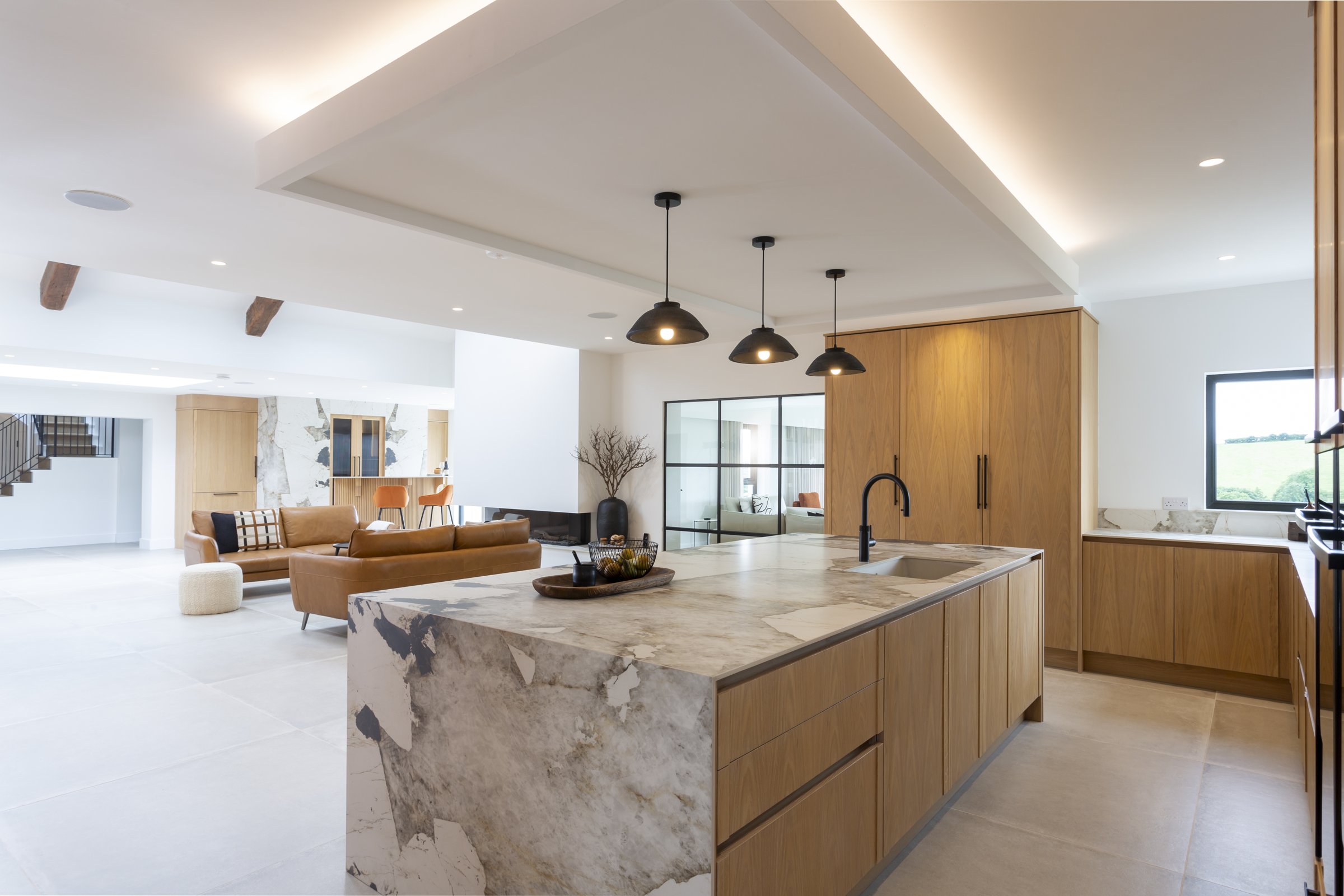
What it suits. Contemporary open-plan rooms, particularly where the kitchen sits in a living space and you want it to read as quiet joinery rather than as a kitchen. It also suits narrow rooms, because there is nothing projecting into the walkway.
What to know. Consider how the household uses the room. A rail-type handleless system is easy for most people to open; push-to-open can be less intuitive for children and older family members. And a completely handleless kitchen forgoes ironmongery as a design element, which some rooms miss.
Slab and contemporary door styles
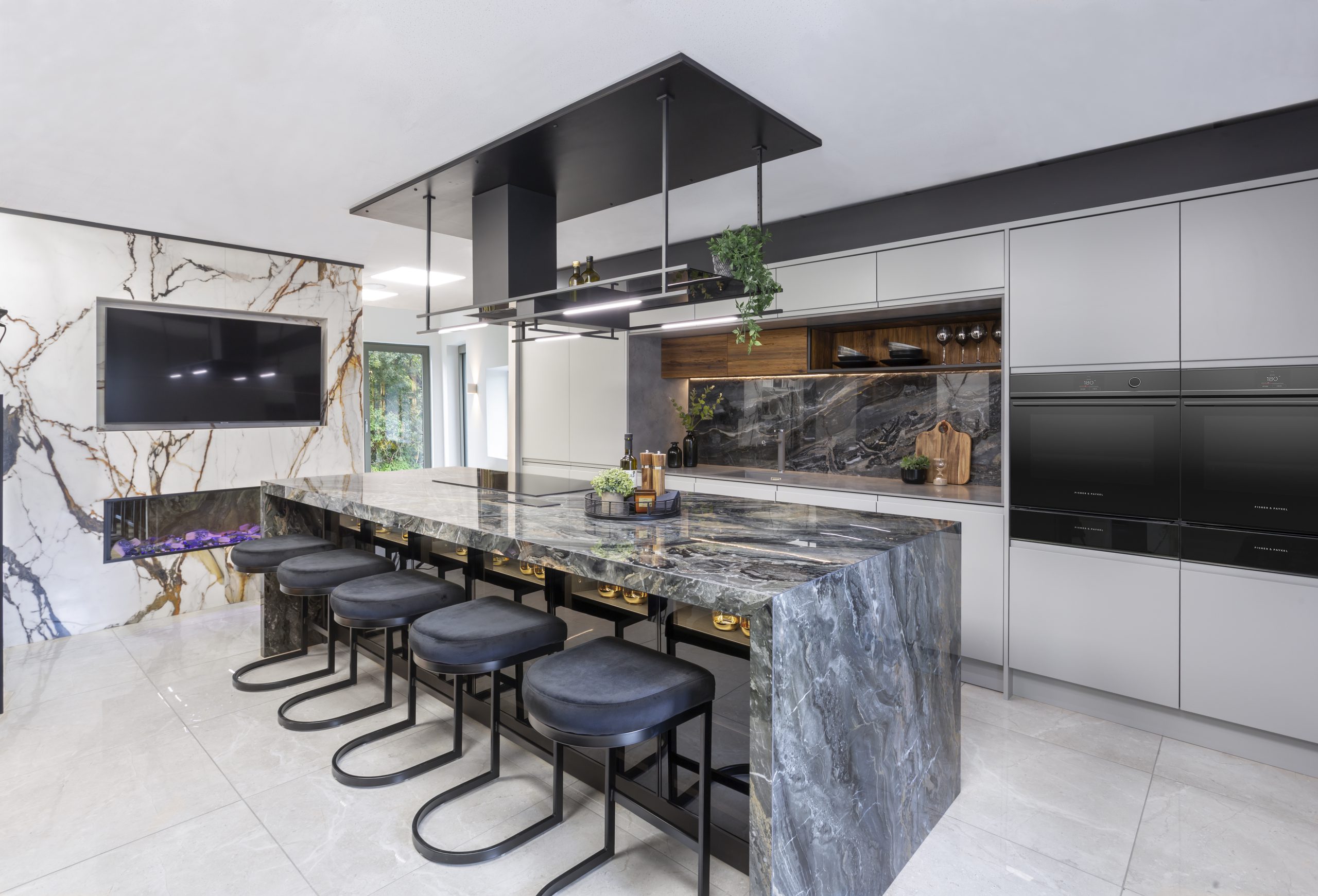
A slab door is a flat panel with no frame and no detail. It can be painted, veneered, in natural timber, or in a textured or matt finish, and it can be handleless or take a handle.
What it suits. Modern architecture, and rooms where the material is doing the talking. A slab door in a good timber veneer with a strong grain is a very different object from a plain painted one, and both are legitimate.
What to know. There is nowhere to hide. Flatness, finish quality and the consistency of the gaps are the entire aesthetic. Slab doors also pair well with in-frame or shaker elements elsewhere in the room, which is a common approach in larger kitchens: contemporary runs with a more traditional island, or vice versa.
Choosing a finish: painted, timber or both
Style is only half the decision. Finish is the other half, and in Irish homes the painted kitchen dominates for good reasons.
Hand-painted. A hand-painted kitchen has a depth and softness that sprayed finishes do not replicate, and it can be repainted years later in a different colour rather than replaced. It is labour-intensive, so it sits at the higher end, and it is one of the clearest markers of a hand-built kitchen.
Sprayed. A factory-sprayed finish gives a flawless, very even surface and is extremely hard-wearing. It suits contemporary slab and handleless styles particularly well.
Natural timber. Oak, walnut and other timbers bring warmth that paint cannot, and they have returned strongly, usually as an accent rather than a whole kitchen. Timber on the island, on open shelving, or on tall unit interiors is a common way to introduce it.
Mixing them. Two colours across wall and base units, or a painted kitchen with a timber island, has become a standard specification rather than a bold one. It works best when one of the two is clearly dominant.
How to choose the right style for your home
These questions resolve the decision faster than scrolling through more kitchen ideas:
- What does the rest of the house say? A kitchen that argues with the architecture around it never quite settles, no matter how good it is on its own.
- Is the kitchen a separate room or part of a living space? A kitchen visible from the sofa benefits from quieter joinery. A separate kitchen can be more characterful.
- How much detail do you want to clean? Framed and beaded doors have more edges than slab doors. This matters more to some households than others.
- Do you want the kitchen to look current or to look permanent? Both are valid aims, and they point in different directions.
- Which elements will you still like in fifteen years? Colour is the easiest thing to change later. Construction is the hardest.
Frequently asked questions
What is an in-frame kitchen?
An in-frame kitchen has a solid timber frame fixed to the front of each cabinet, with the door set inside that frame rather than overlaying it. It is the most traditional and most labour-intensive way to build a kitchen cabinet, and it produces the most substantial finished look.
What is the difference between in-frame and shaker?
They describe different things. In-frame refers to how the cabinet is constructed. Shaker refers to the design of the door itself, a flat panel within a four-piece frame. A shaker door can be fitted to an in-frame cabinet, and often is.
Are shaker kitchens going out of fashion?
There is no sign of it. The shaker door has been in continuous use for well over a century precisely because it is simple enough not to date. What changes is the colour, the rail proportions and the ironmongery around it.
Are handleless kitchens practical?
For most households, yes, particularly rail-type systems which are easy to open. They keep walkways clear and suit open-plan rooms. Push-to-open mechanisms are worth testing in a showroom before committing, especially in a busy family kitchen.
Is a hand-painted kitchen worth it?
If you want depth of finish and the option to change the colour years later without replacing the cabinetry, it usually is. If you want a flawless uniform surface on contemporary doors, a sprayed finish may serve you better. The two suit different styles.
See the styles in person
Photographs are useful for narrowing a shortlist and close to useless for making the final decision. Reveals, rail widths, paint depth and the weight of a properly built door are things you have to see and handle.
Hannaway Hilltown designs and hand-builds bespoke kitchens for homes across Ireland, in in-frame, shaker, handleless and contemporary styles. Explore our design and installation process, see ranges such as The Mornington and The Remo, or read about choosing a kitchen designer in Dublin. Get in touch to arrange a consultation.