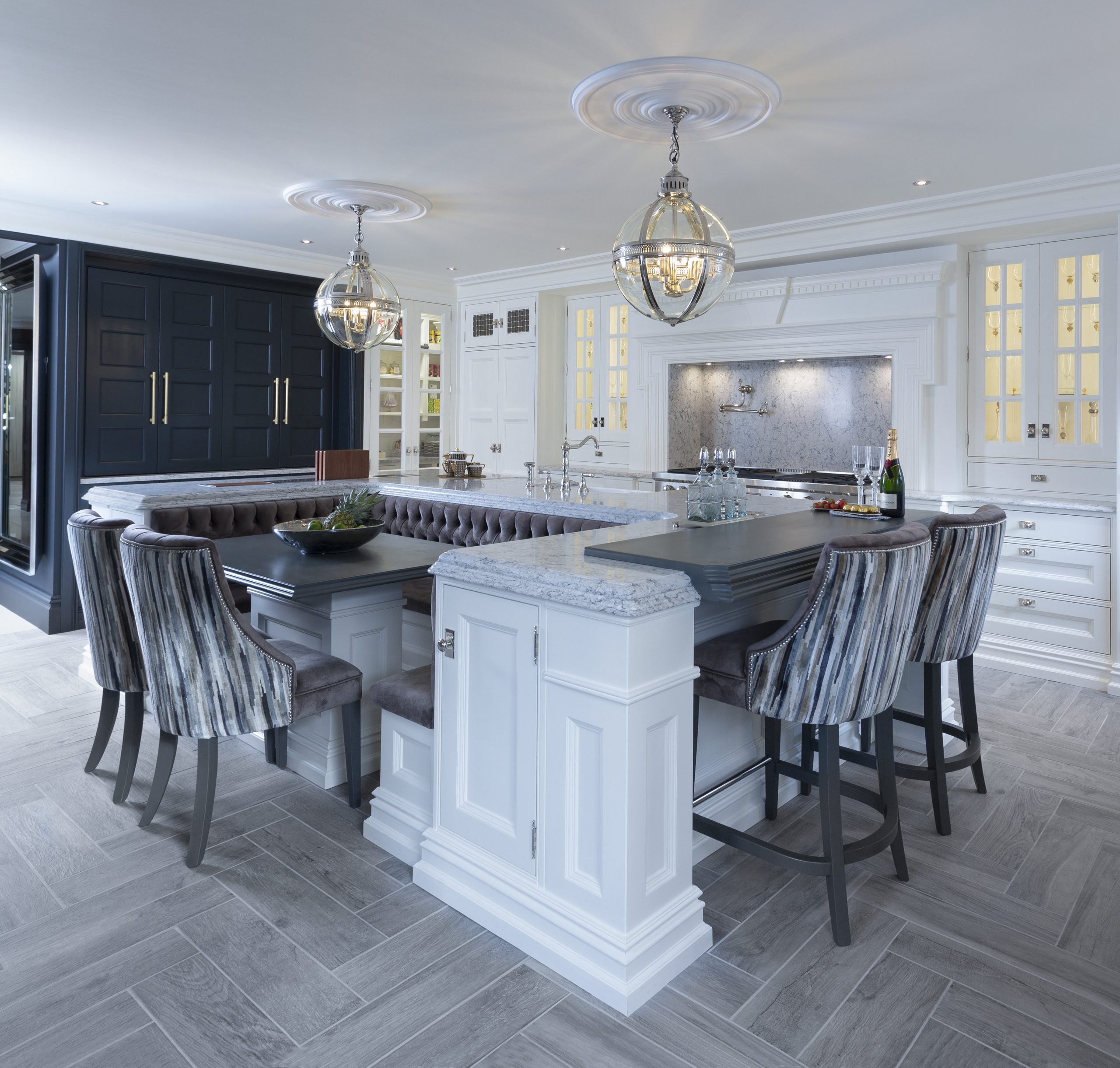
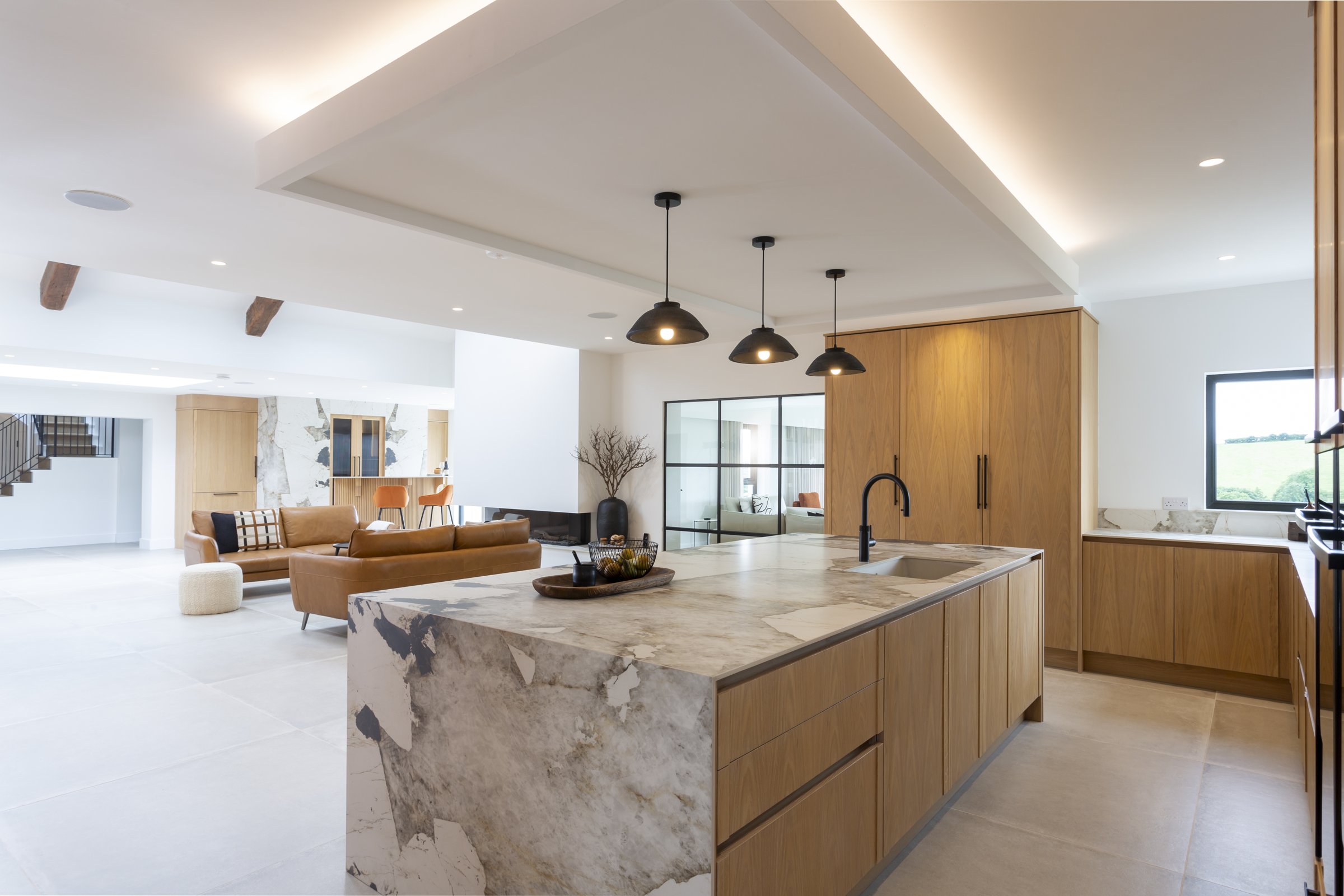
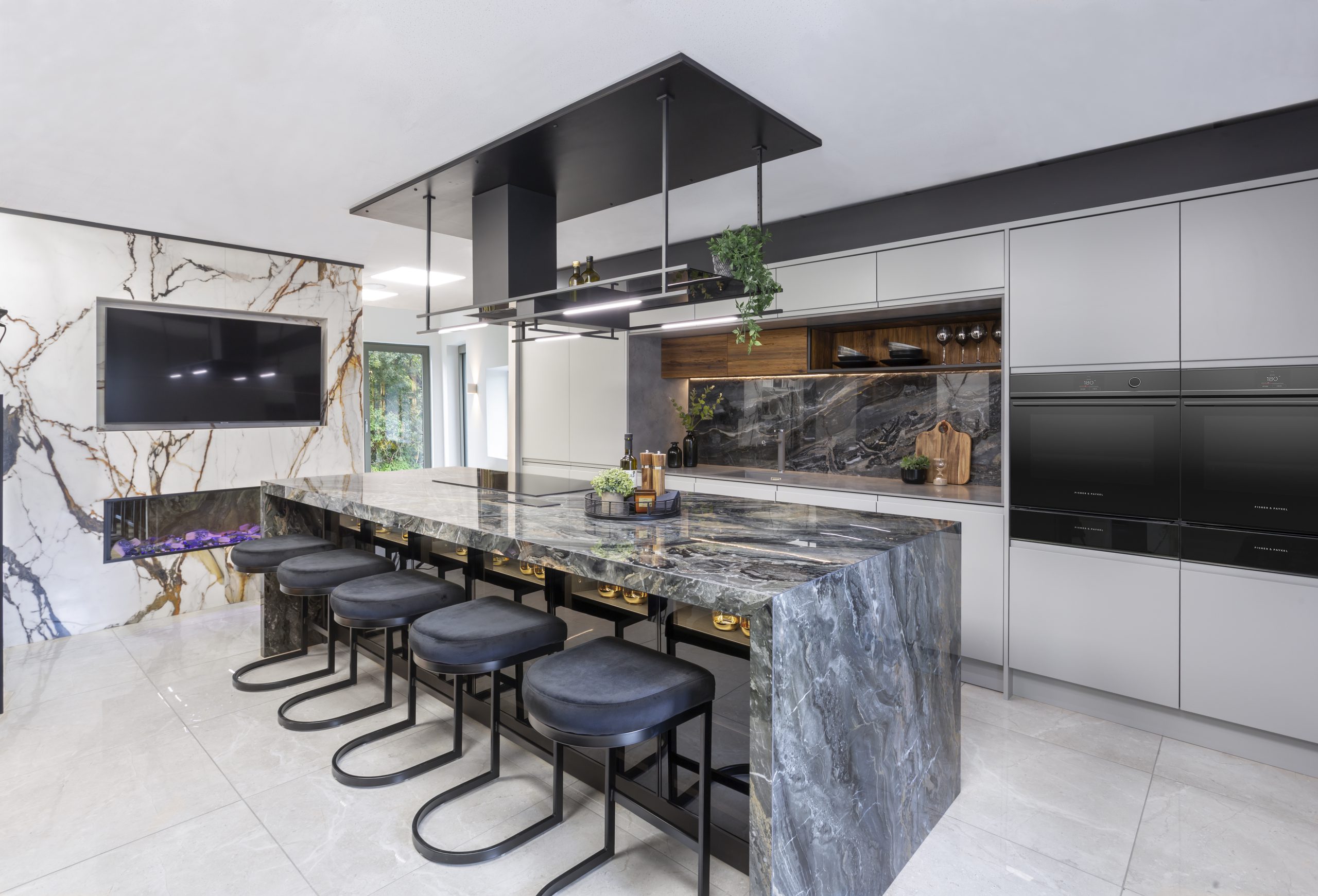
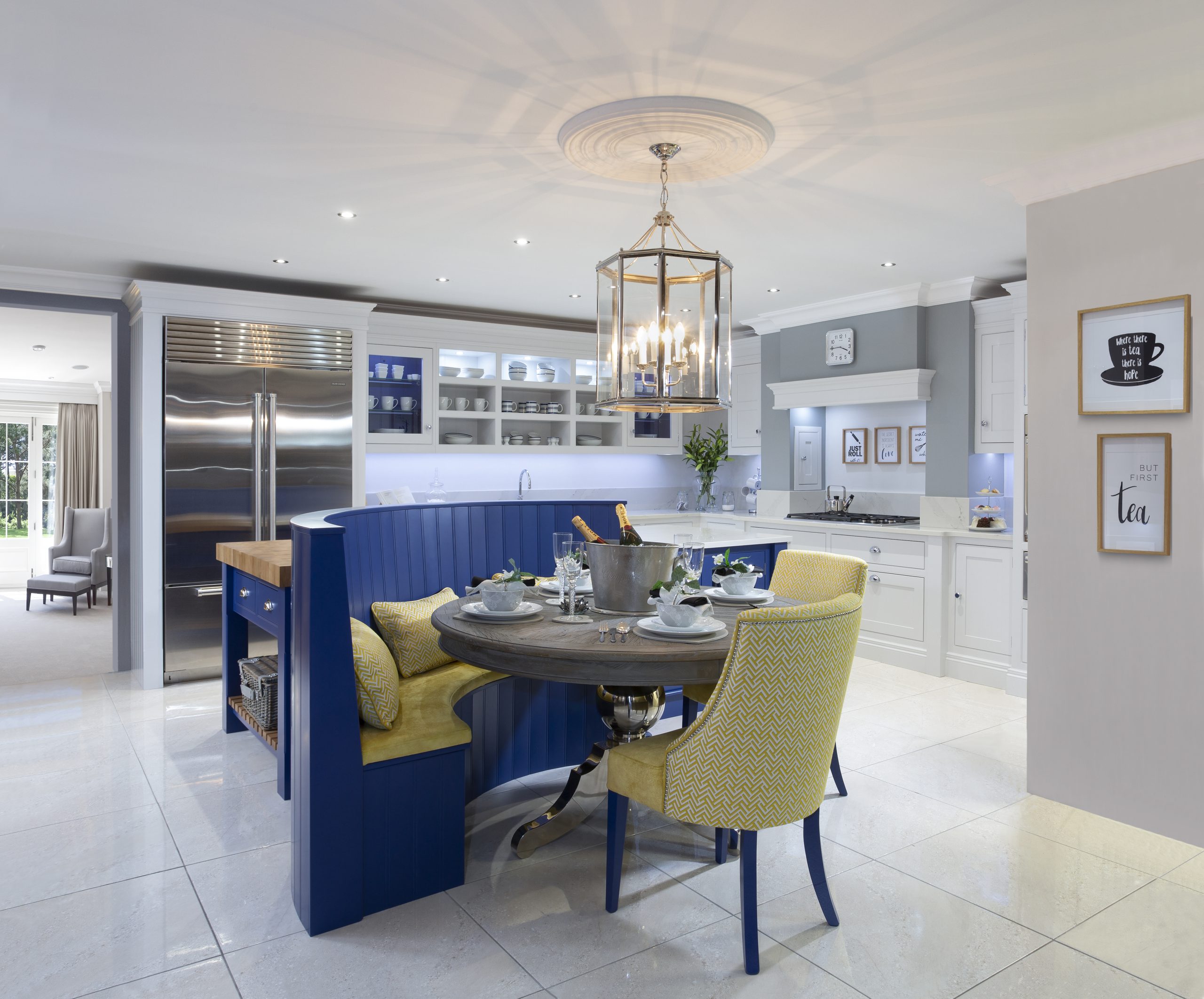


Asking what a new kitchen costs in Ireland is a bit like asking what a car costs. The honest answer is that the range is enormous, and the number you land on has far more to do with decisions you make in the first two design meetings than with anything else. Two kitchens of identical size, in identical houses, can differ by a multiple rather than a percentage.
This guide breaks down where the money actually goes in a kitchen renovation, which choices move the figure most, and how to brief a designer so you get an accurate quote rather than a hopeful one. If you are at the earliest stage of planning, it is also worth reading our overview of kitchen renovation in Ireland.
Why there is no single answer to “how much is a new kitchen?”
Online kitchen cost calculators for Ireland give you a number in thirty seconds, and that number is almost always wrong. They work from square metres and a rough tier, ignoring the three things that drive cost: how the cabinets are built, what goes inside them, and how much of your existing room has to change.
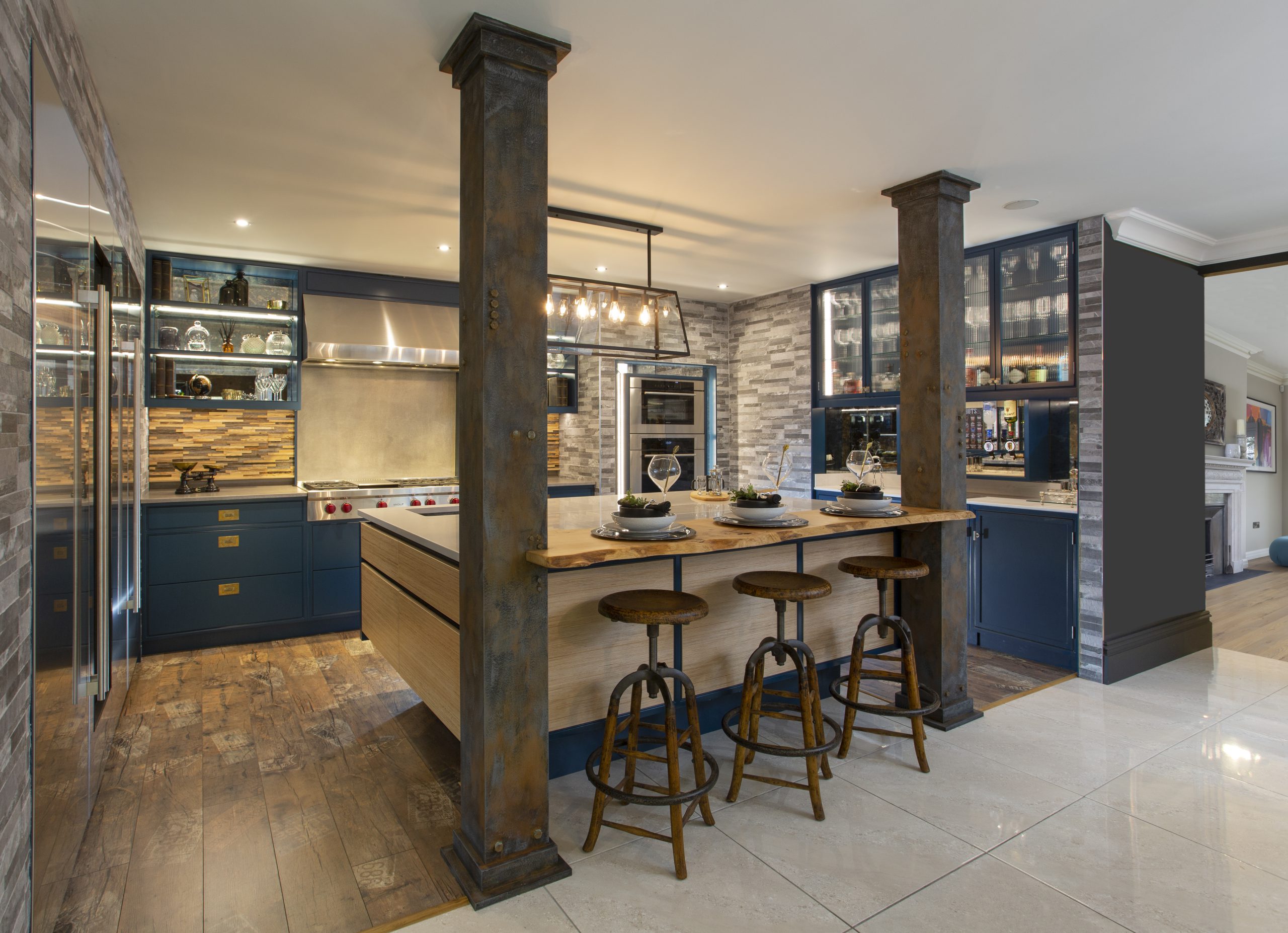
A flat-pack kitchen fitted into a room that needs no structural work sits at one end of the scale. A hand-built, hand-painted kitchen with solid timber carcasses, premium appliances, stone worktops and bespoke joinery around an awkward chimney breast sits somewhere else entirely. Both are “a new kitchen”. What is useful is understanding the levers, so you can hold your budget where it matters and relax it where it does not.
Where the money goes in a kitchen renovation
1. Cabinet construction
This is the single biggest variable and the one most people underestimate. Cabinetry is not just doors. It is the carcass material, the joinery method, the drawer boxes, the runners and hinges, and whether the whole thing is built to a standard module or made to your room’s actual dimensions.
Mass-produced kitchens use chipboard carcasses in fixed sizes, with filler panels closing the gaps where your walls do not cooperate. A bespoke kitchen is built to the millimetre for the space it will live in, in furniture-grade materials, with jointed drawer construction. The difference shows in the price, and again in twenty years’ time when one is still square and the other is not.
2. Worktops
Worktop choice swings a kitchen budget significantly and is one of the easier places to make a considered trade-off. Laminate is the entry point. Engineered quartz has become the default in Irish homes because it is hard-wearing, non-porous and consistent. Natural stone and premium sintered surfaces sit above that, as does thick solid timber for the right style of room.
Beyond the material, watch the details that get quoted separately: edge profiles, upstands and full-height splashbacks, drainer grooves, waterfall ends on an island, and cut-outs for sinks and hobs. Each is small on its own. Together they matter.
3. Appliances
Appliances are the part of the budget most homeowners control directly, and the part where the spread is widest. A full set of mainstream integrated appliances is a very different proposition from a specification built around professional-grade refrigeration and cooking. If you are considering the latter, our page on Sub-Zero and Wolf appliances explains what that tier actually buys you.
Decide early whether appliances are a headline feature or a functional requirement. If they are a feature, protect that budget line and adjust elsewhere. If they are functional, a well-chosen mainstream set frees up money for cabinetry, which is much harder to upgrade later.
4. Ironmongery, storage and interior fittings
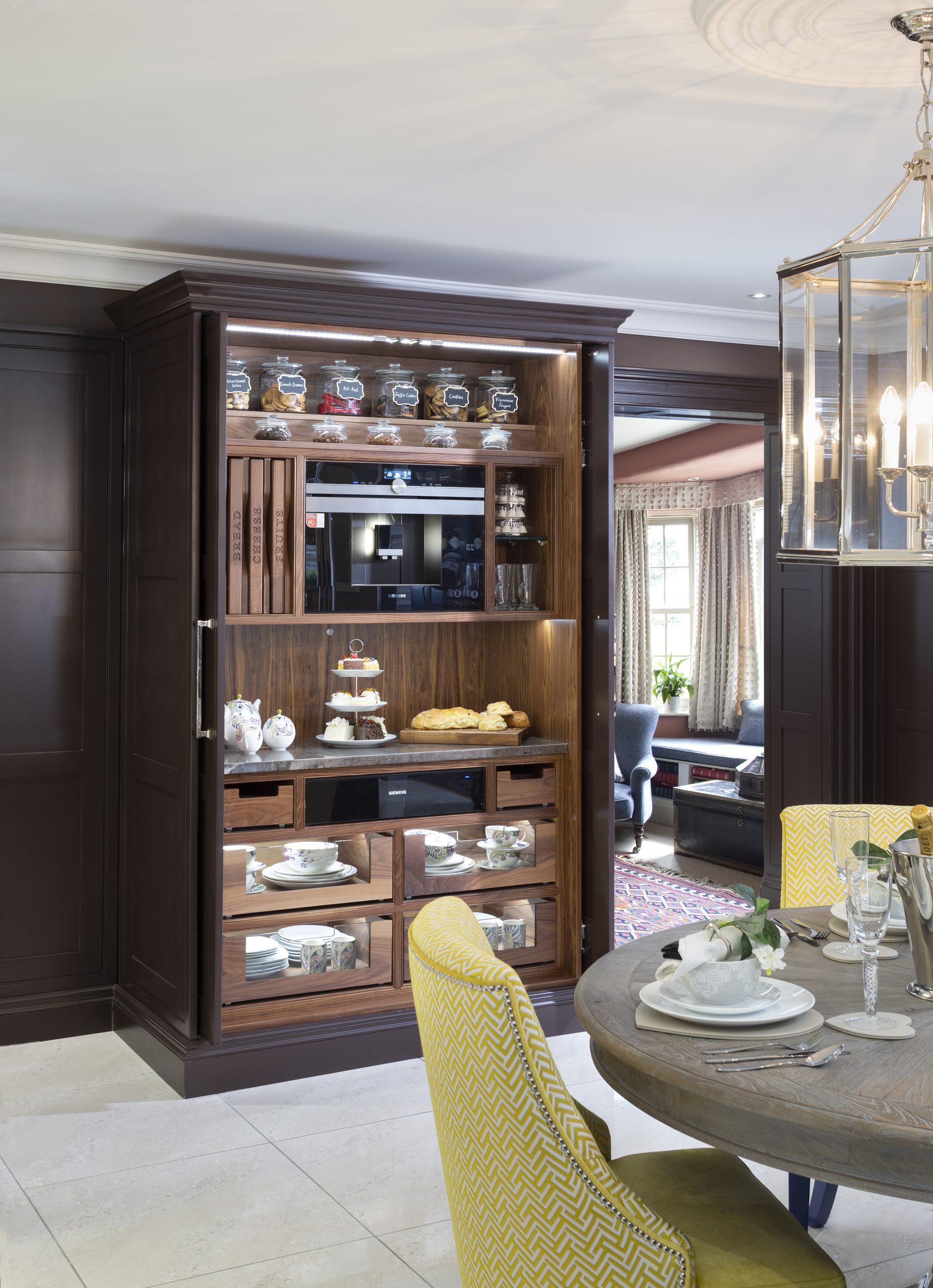
Soft-close everything, cutlery inserts, pull-out larders, corner carousels, integrated bins, spice drawers, internal lighting. None of these is expensive on its own. Specified across a full kitchen, they add up quickly, and they are also the parts you touch every single day. This is rarely the right place to economise hard.
5. Finish
A sprayed factory finish, a hand-painted finish and a natural timber finish are three different processes with three different costs. Hand painting in particular is labour-intensive, and it is one of the things that visually separates a bespoke kitchen from a bought one. It also means the kitchen can be repainted in a new colour years later rather than replaced.
6. The work around the kitchen
This is the line that catches people out. Removing a wall, moving plumbing or gas, upgrading electrics, new flooring, replastering, ventilation and extraction, and making good after the fitters leave are all part of the real cost of a new kitchen even though none of it is the kitchen itself. If your renovation involves an extension, treat that as a separate construction budget from the start so neither number eats the other.
7. Design and installation
Design time, survey, template and installation are real costs whether they appear as a line item or are absorbed into the overall price. A bespoke kitchen involves a designer who visits your home, measures it properly, produces drawings and revisions, and a fitting team who install to that drawing. That process is a large part of why the finished room works.
What shifts the number most
If you want to move your kitchen cost meaningfully in either direction, these are the levers with the longest handles:
- Bespoke versus modular cabinetry. The largest single decision, and the one that most determines how the kitchen looks and lasts.
- Whether the room’s layout changes. Keeping plumbing and services broadly where they are saves a considerable amount of building work.
- Worktop material and run length. Both the material and the amount of it, which is why islands carry a cost of their own.
- Appliance tier. Easy to change on paper, so decide it deliberately rather than by accident.
- Number of tall units and specialist elements. Larders, boot rooms, pantries and bespoke joinery around chimney breasts or under stairs each add cabinetry.
- Island versus peninsula. An island needs services run to it and worktop on all sides. A peninsula often achieves much of the same benefit for less.
How to get a quote you can actually rely on
Vague briefs produce vague quotes, and vague quotes are where renovation budgets go to die. Before you sit down with any kitchen designer in Ireland, get clear on:
- Your total project budget, including building work. The whole number, not the cabinetry figure, so nobody designs you something the project cannot carry.
- Whether walls, windows or services are moving. This changes everything downstream.
- Your appliance intentions. Mainstream integrated, or professional grade.
- How you actually use a kitchen. Two people who cook properly need a different room from a family of five who eat in shifts.
- Your honest timeline. Bespoke work is made to order and cannot be compressed indefinitely.
Then ask every supplier to quote on the same specification. If one quote includes worktops, appliances, installation and making good and another does not, you are not comparing prices. You are comparing documents.
Where bespoke earns its place
A bespoke kitchen is not automatically the right answer for every home. It earns its place in three situations in particular.
The first is an awkward room. Period houses, converted spaces, sloping ceilings, deep reveals and chimney breasts are where standard modules stop working and filler panels start appearing. Bespoke cabinetry simply fits.
The second is longevity. A hand-built kitchen in solid materials is a twenty-year purchase rather than a ten-year one, which changes the comparison considerably across the time you will own the house.
The third is when the kitchen is the main room of the house, which in most modern Irish homes it now is. If a room is where you cook, eat, work and sit, the case for getting it right is stronger than for a room you pass through. You can see how that works in practice on our page covering bespoke kitchens across Ireland, from design to installation.
Frequently asked questions
How much does a new kitchen cost in Ireland?
There is no single figure, because the range across flat-pack, modular and fully bespoke kitchens is very wide. The most reliable way to find your number is to define your specification first, then price that same specification with two or three suppliers. Cabinet construction, worktop material, appliance tier and the building work required determine where you land far more than the size of the room does.
Is a kitchen cost calculator accurate?
Not usually. Calculators work from floor area and a broad quality tier, so they cannot account for layout changes, services, specialist joinery or appliance choices. Useful for a rough sanity check, misleading for anything else.
How long does a new kitchen take?
Design and specification typically take several weeks, manufacture of bespoke cabinetry takes longer than off-the-shelf, and installation is usually the shortest phase. Building work happens before the kitchen arrives. Plan the whole sequence rather than just the fitting week.
What do people forget to budget for?
Flooring, lighting, decorating after installation, extraction, and making good around the room are the most commonly omitted lines. Ventilation in particular is worth getting right at design stage rather than solving later.
Does a new kitchen add value to a house in Ireland?
A well-designed kitchen is consistently cited by estate agents as one of the rooms that most influences buyers, though the return varies by property and location. The stronger argument is usually the years of daily use rather than resale.
Talk it through before you price it
The most useful thing you can do now is have a proper conversation about your space, how you use it and what you want the finished room to do. That is what turns a vague budget into a real specification, and a real specification into a quote you can trust.
Hannaway Hilltown designs and hand-builds bespoke kitchens for homes across Ireland, from Dublin to Galway. Get in touch to arrange a design consultation and start putting real numbers against your project.